
April 2, 2024 · By Alisa Gooding
Burning, Itching And/Or Tender Scalp? Beware Of This Condition: Central Centrifugal Cicatricial Alopecia (CCCA)
The battle won against hair loss begins once we have the right information. Knowledge is POWER! At Agape Body and Soul we desire to empower you to seek care early, without hesitation or shame and ask the right…
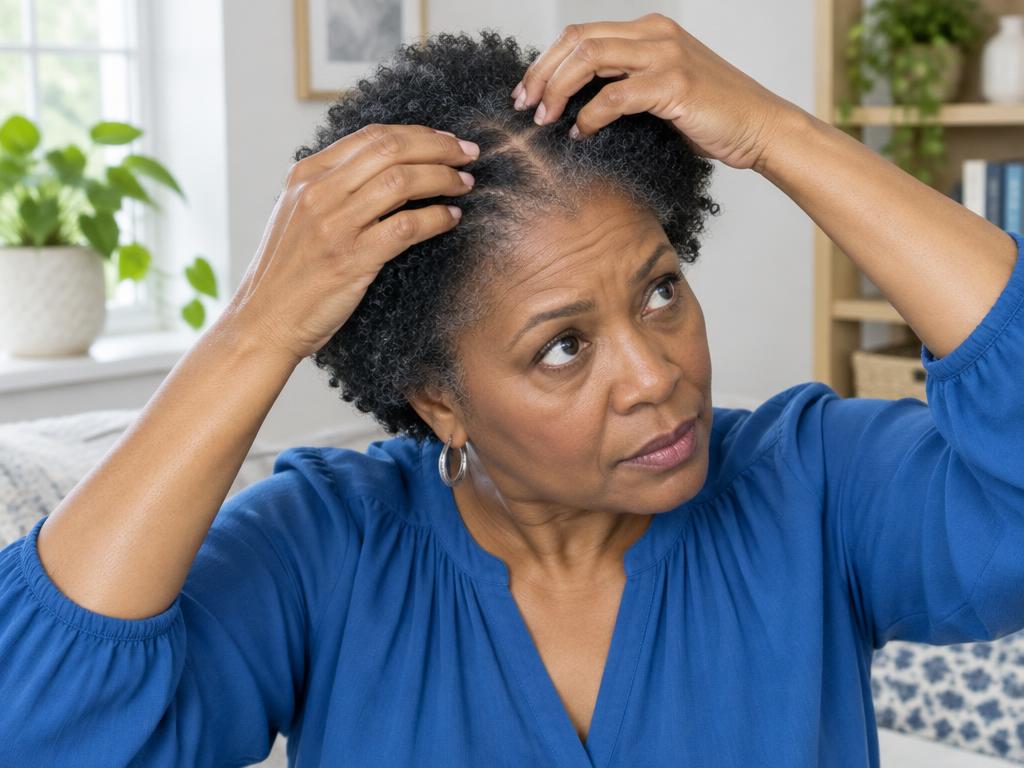
AI-generated educational illustration; not an AGAPE client, clinic photograph, or treatment result.
The battle won against hair loss begins once we have the right information. Knowledge is POWER! At Agape Body and Soul we desire to empower you to seek care early, without hesitation or shame and ask the right questions. You deserve thorough answers with solutions that apply the principles of holistic healthcare (incorporating the mind, body, and soul) to live your best life.
WHAT IS IT?Central Centrifugal Cicatricial Alopecia (also known as CCCA)
Central = referring to the central (crown) part of the scalp
Centrifugal = a round or circular pattern
Cicatricial = scarring of tissues
Alopecia = hair loss
The most common type of scarring alopecia seen in Black women is Central Centrifugal Cicatricial Alopecia (CCCA). While conservative estimates place the prevalence of CCCA at anywhere from 2.7% to 5.7%, it is likely that the numbers affected are much higher because people with CCCA often remain untreated and suffer in silence with this devastating disease. Wigs and weaves are often used to cover up the effects of this disease but they actually do more damage.
CCCA is progressive, destructive and, if left untreated, the hair loss may be permanent. Early recognition and treatment are critical.
WHAT ARE THE SYMPTOMS OF CCCA?
***CCCA may FEEL like scalp tenderness, burning, and itching usually in the crown area.
***CCCA may LOOK like redness of the scalp, thinning, dry, brittle hair with breakage, and baldness (in the later stages) usually in the crown area.
This article is educational and does not diagnose your symptoms. Seek appropriate medical evaluation for sudden changes, pain, sores, or persistent scalp concerns.