
April 15, 2026 · By Alisa Gooding
Postpartum Hair Loss: A Practical Guide to Shedding, Styling, and Follow-Up
Why shedding can change after childbirth, gentle ways to manage hair while it recovers, and signs that merit individualized medical assessment.
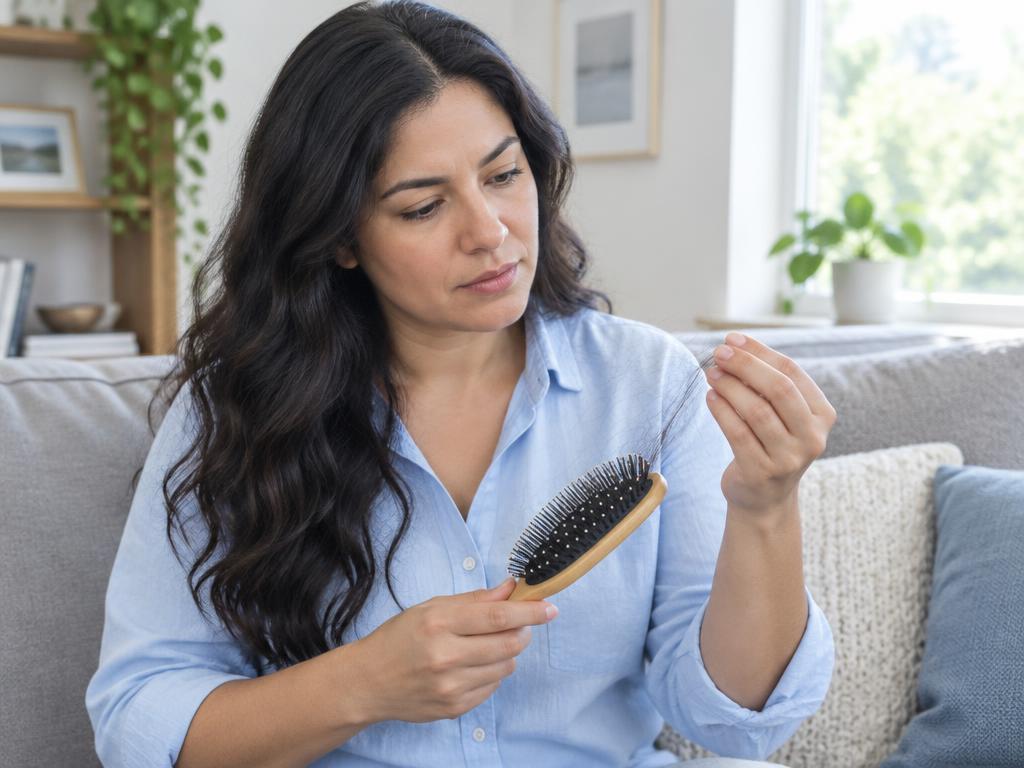
AI-generated educational illustration; not an AGAPE client, clinic photograph, or treatment result.
Why shedding may appear after birth
Many people notice increased shedding in the months after childbirth. The AAD describes postpartum shedding as telogen effluvium, a temporary shift that commonly becomes noticeable a few months after delivery. It often improves over time, but each person’s course differs; no exact timeline can be promised, and other causes can coexist.
It can feel alarming to see more hair in the shower or brush while caring for a newborn. This change is not a personal failure and does not mean that every strand is permanently lost. If the pattern is unusual, severe, prolonged, or accompanied by scalp symptoms, seek individualized medical advice rather than assuming it is routine postpartum shedding.
Make daily care easier
Choose manageable styles and gentle detangling while shedding is noticeable. Avoid tight ponytails, heavy extensions, and frequent heat if they add tension or breakage. A haircut or styling approach that creates a sense of fullness may be useful cosmetically, but it does not change the underlying hair cycle. Use products that suit your scalp and avoid adding supplements unless a clinician recommends them.
Consider taking a few consistent photos rather than counting every hair. Record when shedding began, whether it is diffuse or concentrated, recent illness or medication changes, and any changes in diet or wellbeing. Do not stop medication or begin a high-dose supplement without speaking with a healthcare professional.
Distinguish expected shedding from a concern
Postpartum shedding may occur alongside another hair or scalp condition. A published case series describes postpartum telogen effluvium revealing underlying traction alopecia in some patients; it does not establish how common that is for everyone. The useful lesson is to look at the pattern and styling history, not to assume every postpartum change has one explanation.
Ask for medical evaluation if you have a distinct bald patch, progressive widening, loss concentrated at the hairline, pain, itching, scale, or skin changes. A dermatologist can assess the scalp, hair, and relevant health history, and decide whether additional testing is appropriate. Seek care sooner if symptoms are rapidly worsening or the scalp appears inflamed.
Support without overpromising
AGAPE’s trichology care includes assessment of shedding and thinning, microscopy-based follicle evaluation, personalized at-home guidance, and follow-ups. That service can help organize observations and discuss care options, but it is not a substitute for medical diagnosis. The Trichoscopy Suite offers magnified imaging as part of an assessment; images alone cannot determine every cause or guarantee regrowth.
If you are concerned, prepare questions: Does this pattern fit common postpartum shedding? Are there signs of breakage or traction? Should I see a dermatologist or primary-care clinician? Is testing indicated? Clear answers can help you choose a next step that fits your health and your life as a new parent.
This article is educational and does not diagnose your symptoms. Seek appropriate medical evaluation for sudden changes, pain, sores, or persistent scalp concerns.