
July 15, 2026 · By Alisa Gooding
Scalp Imaging for Hair Progress: How to Track What Changes
A practical guide to repeatable scalp photos, trichoscopy questions, and interpreting progress without overreading a single image.
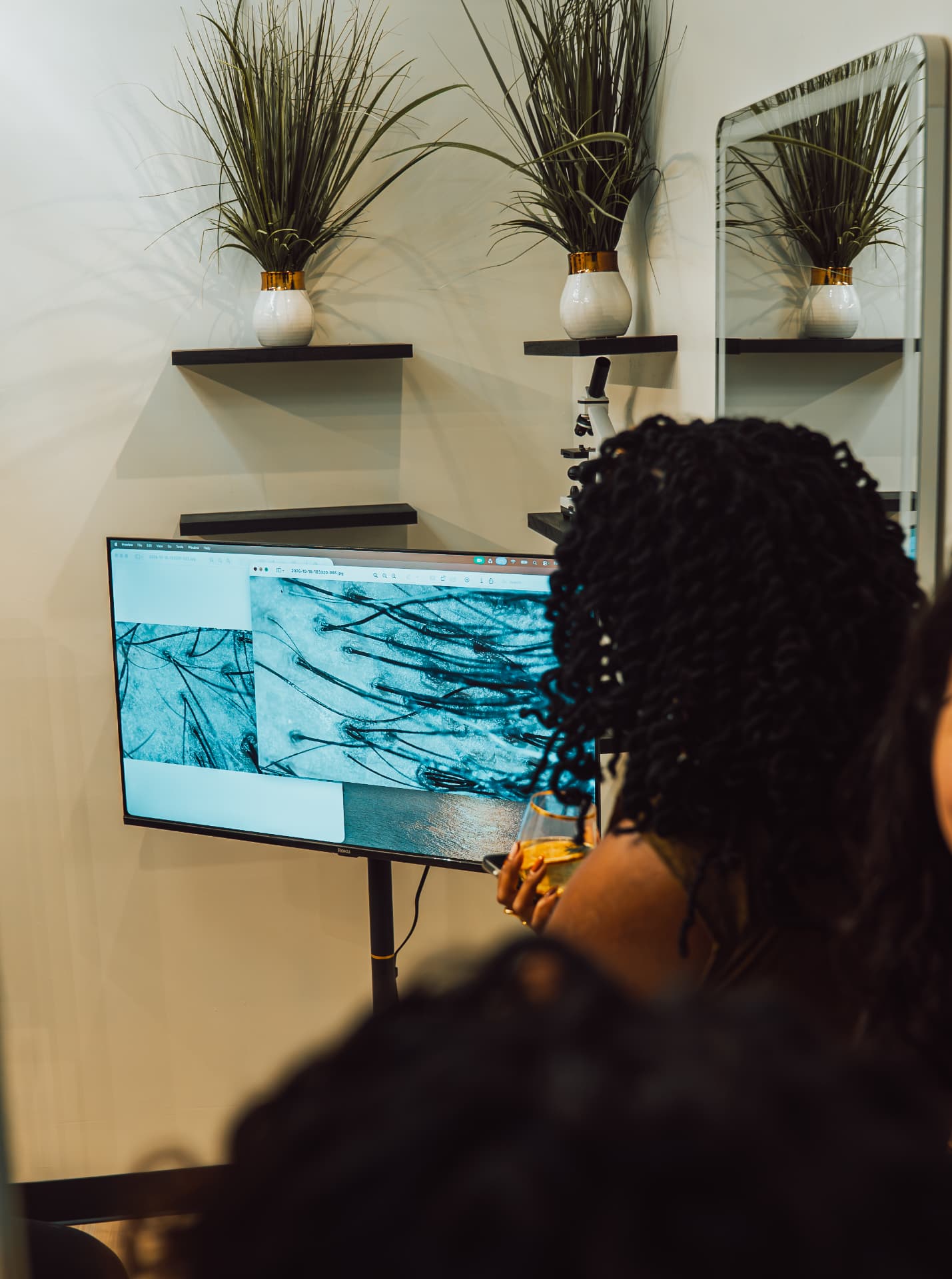
Images are records, not verdicts
Scalp imaging can make selected features easier to observe, but a photograph alone does not explain every cause of hair loss. AGAPE’s Trichoscopy Suite describes high-magnification imaging to visualize scalp and follicles and document progress over time. Ask what is being imaged, what the method can show, and when findings should be referred to a dermatologist.
Why consistency matters
A different part, camera distance, lighting, hair styling, or wet-versus-dry state can make two images look unlike each other even when the underlying condition has not changed. Clinical literature describes standardized photography as useful for objective assessment and monitoring; consistency helps make comparison more informative.
A repeatable home-photo routine
Choose a few views that match the concern: center part, crown, temples, or hairline. Use the same room and lighting, camera distance, hairstyle, and approximate interval. Keep hair in a similar state and avoid changing products or styling solely to make a photo look better. Store images privately and label each with date and view. If taking photos increases distress, discuss alternatives with your clinician.
What to record beside the image
Add brief context: recent cut or color, illness, medication changes, a new style, scalp symptoms, and whether you noticed more shedding or breakage. These notes help explain why an image may differ. Do not rely on daily pictures or strand counts to diagnose yourself. A review of hair evaluation methods notes that no single measure is ideal; tools should be interpreted cautiously and in context.
Questions to ask at a trichoscopy visit
Ask whether the same scalp regions and magnification can be repeated, whether images are saved for comparison, and who interprets them. Ask what change would be clinically meaningful and what uncertainty remains. A visual comparison may inform follow-up, but medical diagnosis and treatment decisions belong with an appropriately qualified healthcare professional. If images show redness, scaling, or a patch that concerns you, ask whether dermatologist assessment is warranted.
Use tracking to support a conversation
AGAPE offers baseline imaging and follow-ups as part of its trichology and imaging services. Bring your dated records to the Free 15-Min Virtual Consultation or assessment and discuss them alongside your history and goals. A useful tracking plan should be simple enough to sustain and should have a review point; it should not be used to promise regrowth, certify treatment efficacy, or delay care for worsening symptoms. The purpose is clearer observation and better questions—not certainty from a picture. Agree who will review the records, how often to capture them, and what symptoms merit contact sooner. Keep comparisons focused on the same area rather than trying to estimate exact density from a phone screen. A steady, documented pattern is more useful to discuss than a collection of unrelated close-ups.
This article is educational and does not diagnose your symptoms. Seek appropriate medical evaluation for sudden changes, pain, sores, or persistent scalp concerns.